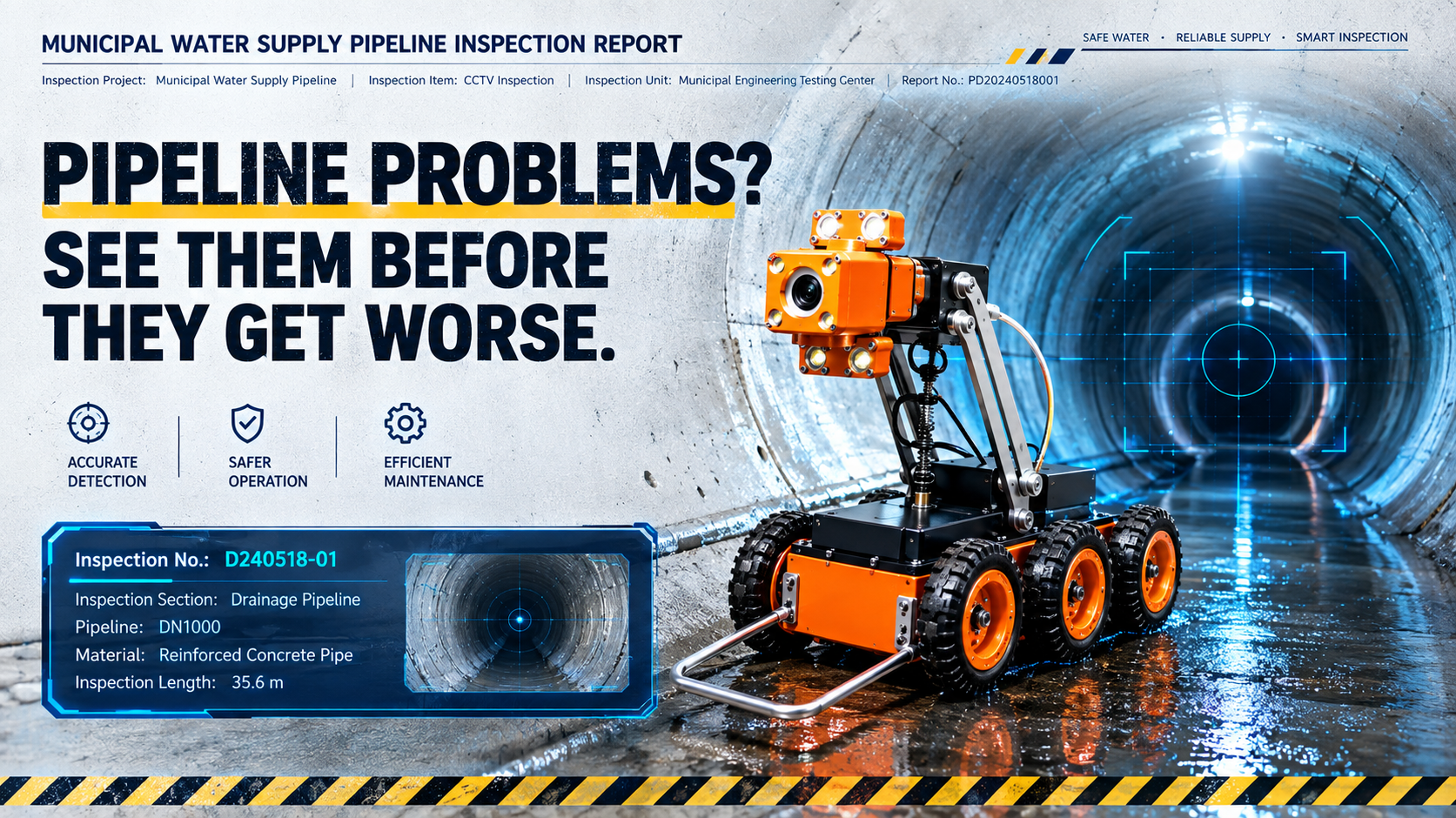
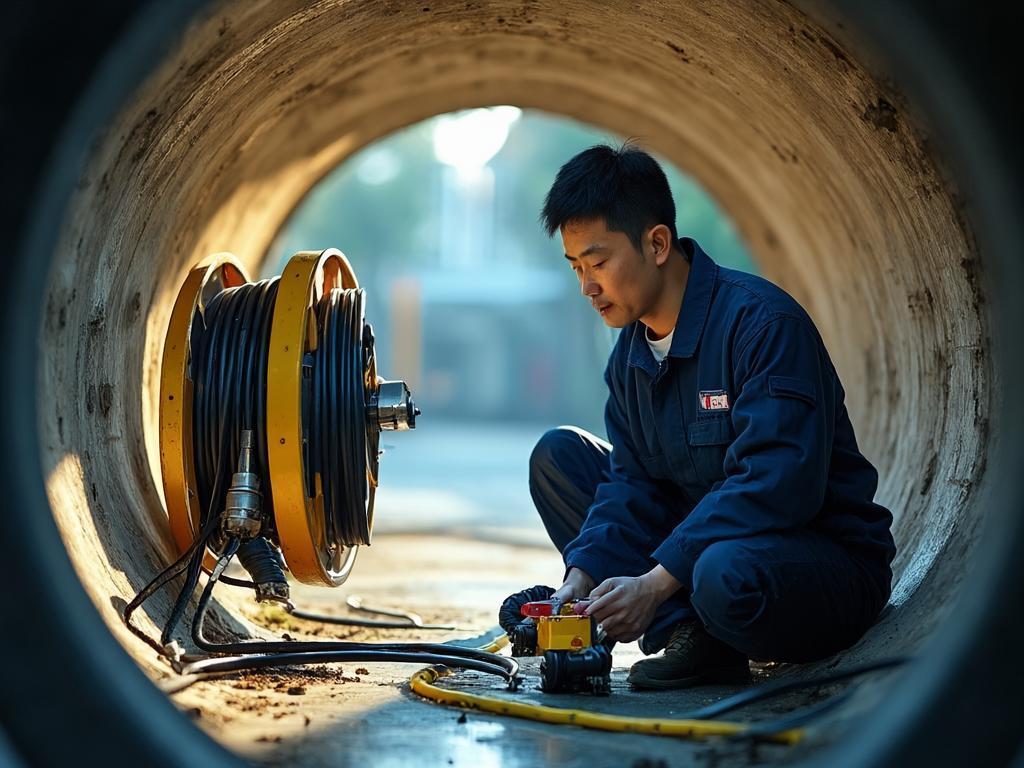
A question inspection teams often ask: when a municipal drainage section needs CCTV inspection, how should you organize the workflow on site? The answer is to follow four steps — deployment, inspection, assessment and reporting. A crawler robot descends through the manhole while the operator works remotely at the control station, capturing high-definition footage segment by segment and assessing defects against standards.
Step 1: Deployment — Equipment Setup and Safety Confirmation
Before inspection, confirm the pipe location, chamber structure and traffic conditions, and carry out gas detection in the manhole along with traffic control. For equipment layout, place the crawler robot, cable reel and control station near the manhole. The cable reel handles pay-out and retrieval while recording distance. After the robot is lowered into the pipe, the operator confirms a clear camera view from above through the control station before starting the formal inspection. The value of this approach is that personnel do not need to enter the pipe, reducing risks such as hydrogen sulfide exposure and oxygen deficiency. When paying out the cable, avoid scraping the chamber wall and leave sufficient working space.
Step 2: Inspection — Segment-by-Segment Wall Imaging
During inspection, control the robot to travel at a steady speed and use the 360° rotating HD camera to record wall conditions segment by segment. Adjust the light according to the on-site environment, slow down when a suspected defect is found, and switch between front and rear views to re-check. The control station overlays robot status and distance measurement in real time, making it easy to record where defects appear. If the pipe contains mud or sediment, the all-terrain chassis and multi-wheel independent drive provide the necessary passability; for heavily silted sections, pre-treatment can be carried out before inspection. Note: travel speed should not be too fast, and footage must be continuous and clear to avoid missing defects such as deposits, fractures, deformation and leaks.
Step 3: Assessment & Reporting — On-Site Review and Output
After video capture, review the footage on site and assess defects. Following current technical standards such as the Technical Specification for Inspection and Evaluation of Urban Sewer, classify and record structural and functional defects by grade. The control station includes built-in inspection and reporting software that can directly generate an inspection assessment report, serving as the basis for pipeline maintenance and repair decisions. Defect locations, distance data and footage screenshots in the report should correspond one-to-one for easy review and archiving. This step is key to closing the loop of municipal drainage network inspection.
Common Questions
Q: The pipe has mud inside — can the robot still inspect it?
A: DannaBot crawler robots have a certain ability to pass through mud and sediment, depending on the level of silting and pipe diameter. On-site surveys before formal inspection can determine whether pre-treatment is needed.
Q: How long does it take to inspect one section?
A: This depends on inspection distance, pipe diameter and the number of defects. A short single section is usually measured in hours; the actual schedule is subject to on-site operations.
If your project is planning a network survey or acceptance inspection, contact DannaBot for an on-site survey. Based on pipe conditions, we will confirm the equipment configuration and work plan so that your municipal drainage CCTV inspection workflow fits the field reality.