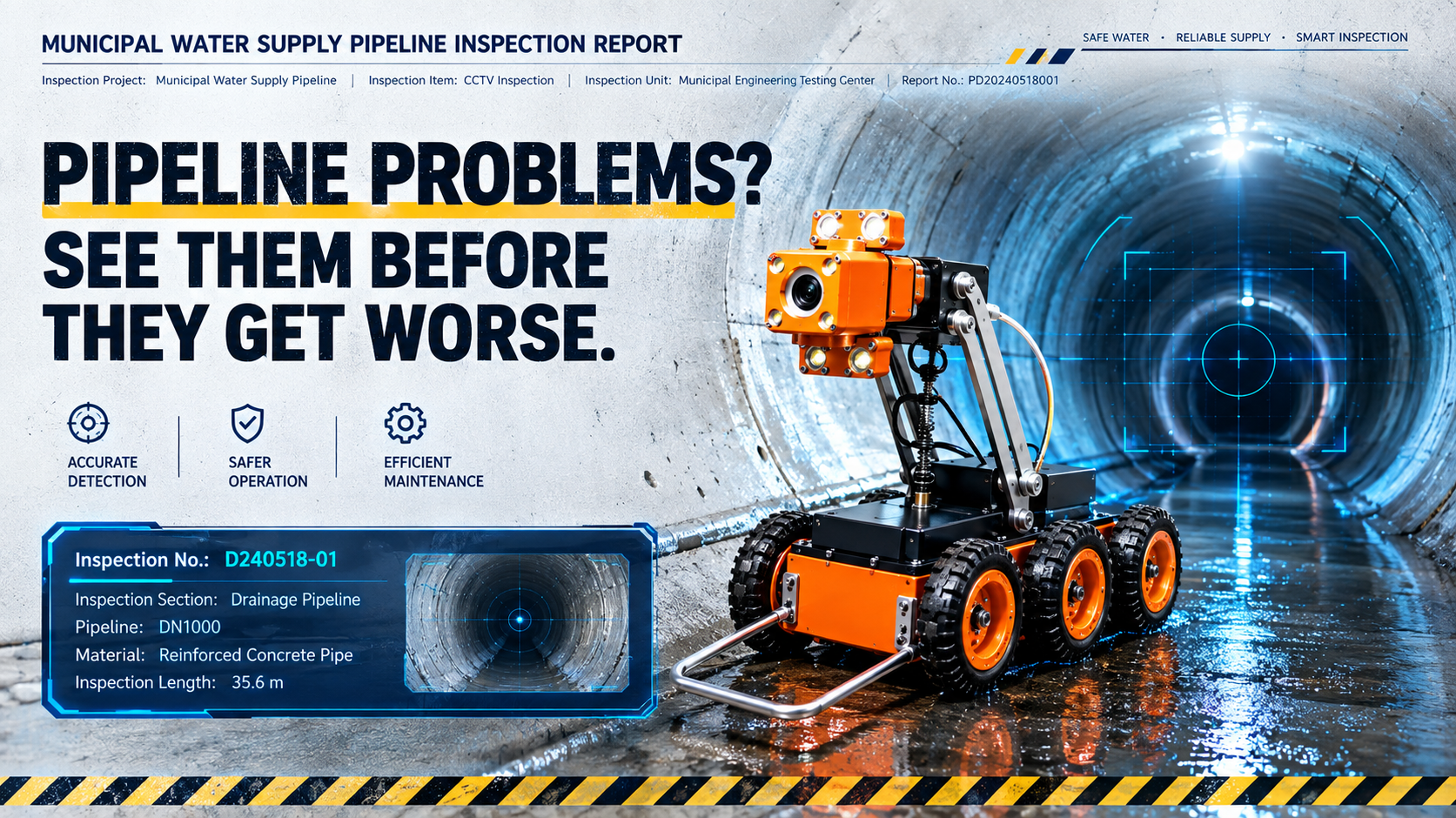
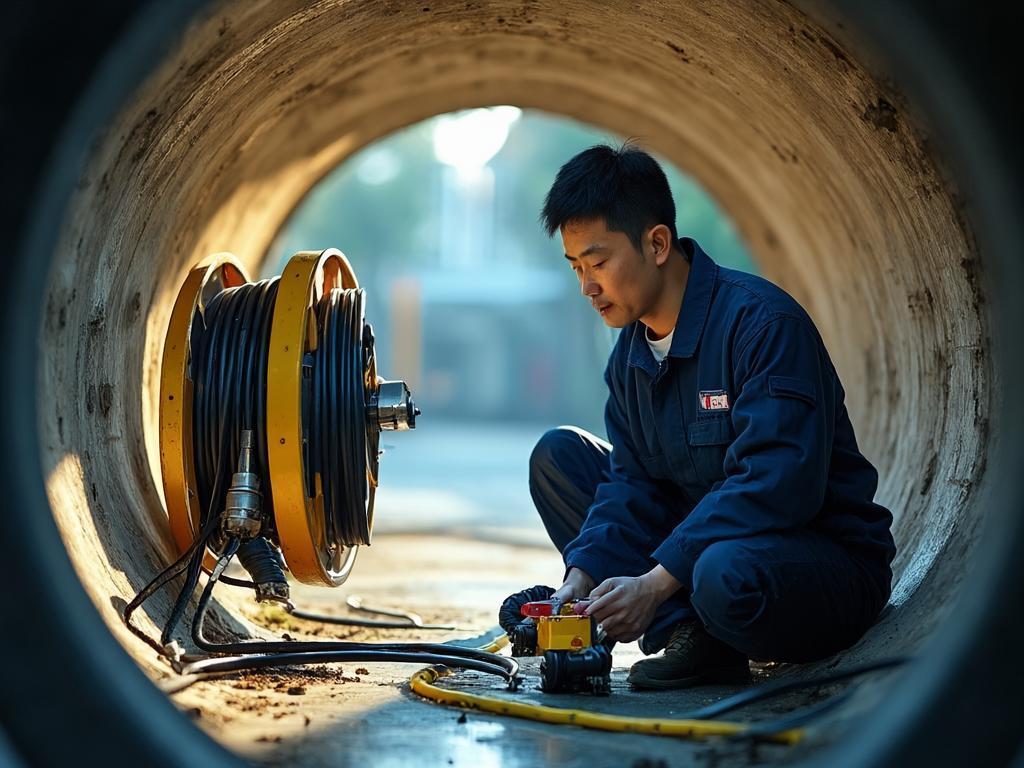
In industrial pipe inspection, many bends and steep slopes are common difficulties. Many inspection teams ask: can a crawler robot reliably pass such sections? From equipment selection, work practices and on-site survey coordination, CCTV pipe inspection robots can handle these industrial pipes — but the preparation needs to be thorough.
Many Bends and Steep Slopes: Where Is the Difficulty?
Industrial pipes often have limited diameters, and bend radii tend to be small, so the robot needs enough space and steering capability when turning. Steep slopes place higher demands on the drive system: wheels need sufficient traction and the center of gravity must be stable. More commonly, residual oil, mud or condensed water inside the pipe reduces the friction coefficient and makes passage harder. Forcing the robot through can cause jamming or sliding and may damage the equipment.
How to Make the Crawler Robot Pass Reliably?
The key lies in combining equipment capability with on-site practices.
Equipment: The D8 crawler robot uses an all-terrain chassis with multi-wheel independent drive and supports 360° in-place steering, giving it a solid foundation in narrow bends and slopes. The HD camera can rotate 360° with adjustable LED lighting, so even when the robot tilts, wall conditions remain visible.
Work practices: Slow down when negotiating bends and, if necessary, fine-tune the robot angle from the control station to avoid forcing it through the curve. When climbing, watch the cable pay-out speed to prevent cable drag from affecting drive force. The odometer records position in real time, so defect location is not lost when travel attitude changes.
Data: Through HD imaging and defect assessment, inspectors can evaluate wall corrosion, scaling, deformation and other conditions on site. Combined with real-time video backhaul, an inspection assessment report can be generated to support follow-up maintenance decisions.
On-Site Precautions
Before inspection, check the pipeline records to understand pipe diameter, number of bends, bend radius, slope and media conditions; then conduct an on-site survey to confirm that the bends and slopes the robot must pass are within equipment capability. Clear obstacles at the pipe entrance before work, and where necessary, run a pig or flush first to reduce residual media. A single operator controls the control station, monitoring robot status and video throughout. If resistance is encountered, stop promptly — do not force the robot forward.
FAQ
Q: Can crawler robots inspect all industrial pipes in a plant?
A: It depends on pipe diameter, bend radius, residual media and environmental conditions; an on-site survey is recommended to confirm.
Q: Does inspection require a production shutdown?
A: Generally it is arranged around maintenance windows to minimize impact on production; the specific plan is subject to on-site scheduling.
You can contact DannaBot with your pipeline drawings. We can conduct an on-site survey, assess whether the D8 crawler robot suits your pipe sections, and provide an overall inspection plan.